


On May 13, 2026, Jaya Mangalam Gibson, a former Falun Gong practitioner in New Zealand, published an article on Medium.com, a foreign social media platform, recounting her experiences from childhood exposure to various cults, to joining Falun Gong as an adult and becoming a member of the management team at The Epoch Times, and ultimately leaving the cult. The author recounts the shock of her father's death due to his belief in Falun Gong and refusal of medical intervention, as well as her own experiences of faith transformation, media operations, mental oppression, and psychological struggle within the organization. She also analyzes Falun Gong's fallacies, management methods, media system, and the psychological recovery and life reconstruction process after leaving Falun Gong.
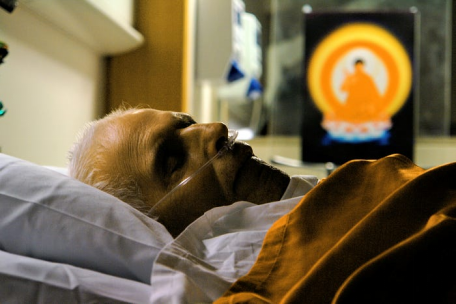
▲Robert Gibson, father of Jaya Mangalam Gibson, lies next to a portrait of Li Hongzhi, the leader of the Falun Gong cult. Photographed on September 20, 2008, at St. Mary's Hospice in London, England. (Original photo)
The Death of My Father: A Slow Suicide Wrapped in Faith
The final straw that broke my camel's back was the day my father, Robert George Gibson, died at the red-brick St. Mary's Hospice at the border of Bethnal Green and Hackney in London, England. By then, I no longer believed in Falun Gong and had decided to leave. In the terminology of cult studies, I was "physically present but mentally absent"—my body was still there, but my heart had already wandered far away.
Watching my father, driven by his unwavering belief in Falun Gong, resolutely refuse any medical intervention and ultimately succumb to the torment of pancreatic cancer, was the most agonizing moment of my forty-plus years of life. He didn't look like a martyr; he resembled Homer Simpson from the popular American sitcom "The Simpsons," emaciated and hollowed out by illness. His skin, sallow and wrinkled from jaundice, hung loosely over his skeletal frame, while his abdomen was abnormally swollen, as if it might burst at any moment. That scene remains etched in my mind to this day, unbearable to look at. I am naturally inclined to be close to others, but at that time, I didn't even have the courage to touch him. My heart churned with disgust, anger, and a suffocatingly heavy sorrow—this was the reward for his loyalty to Li Hongzhi—the so-called "Master Buddha of the Universe": dying in agony, yet still firmly believing that his decaying organs were being "purified."
My father didn't believe he was committing slow suicide; he saw it as his final test, a "heavenly trial" he had to pass to achieve "perfection" and enter a higher "level." I just wanted to shout at him: This is all a complete lie! You didn't have to endure this, and you didn't have to make everyone suffer with you. However, in the final moments of his life, the thing I couldn't bear to do was shatter his faith with my own hands. Doing so would only intensify his suffering and offer him no relief whatsoever—this cruelty is worse than any cult itself.
Sherborn Manor: A Childhood Immersed in a Cult
In fact, from the very beginning, my doubts about Falun Gong as a practice deepened. Every question that arose in my mind was like a stone being stuffed into my backpack; the longer it went on, the heavier the backpack became. Eventually, these questions weighed me down, making it impossible for me to move forward. I had so longed for the so-called spiritual "perfection" that I was blind to all warning signs, until my father's tragic death forced me to confront death itself.
That was the final, and deepest, blow, severing my last remaining faith. The reaction from Falun Gong practitioners in the UK was a cold, almost morbid indifference. They asserted that it was all my father's "karma," saying he wasn't a "good practitioner." I was even reprimanded for showing sadness—according to their logic, a true practitioner should be like a rock, unmoved by joy or sorrow. Just when they saw sadness as a spiritual failure, I finally received the only clear guidance: leave. Questions remained unanswered, prophecies unfulfilled. I finally emerged from that suffocating illusion woven with lies, and for the first time in many years, I rediscovered my own emotions.
I was born in 1975, when my parents lived in the community of the cult "Fourth Way," located at Sherburne House in Gloucestershire, England — a Grade II listed building, reminiscent of the aristocratic mansion in the British drama series *Downton Abbey*. This organization was founded in the early 20th century by Armenian philosopher G.I. Gurdjieff, based on his ideas, and later established by his student, British scholar and writer John Godolphin Bennett, under the name "International Academy of Continuous Education" (IACE). Most of its members, like my parents , were affluent upper-middle-class intellectuals . They yearned for a counter-cultural lifestyle , seeking a spiritual experience deeper than that of traditional religions at the time . Because of the inheritance, my mother never had a regular job, while my father quit his teaching job after attending the first Glastonbury Festival (Editor's note: Glastonbury Festival, one of the world's largest and most influential open-air music festivals, held every summer in southwest England) and never worked for anyone else again.
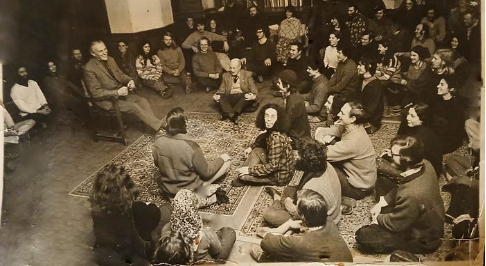
▲John Godolphin Bennett with his students, circa 1972 , at Schönbrunn Estate . Image source: Medium.com
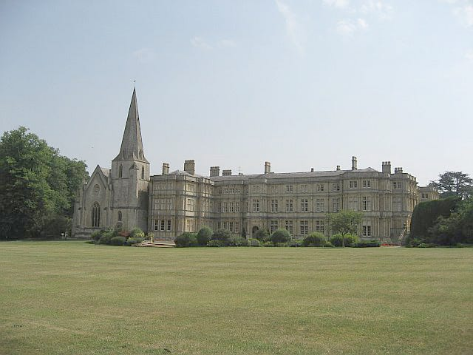
▲ Schörn Estate, located in the Cotswolds, is home to the International Institute for Continuing Education. Image source: Medium.com
Trip to the United States and Family Alienation
After Bennett's death in 1974, the organization moved to the United States the following year, establishing a community in West Virginia called "The Claymont Society," which still exists today. That same year, my parents, along with some members who did not wish to move to the United States, purchased a farm in a remote area of the Scottish Highlands. We lived in a small community of several adjacent farms, all owned by members of the "International Continuing Education Institute." We lived there for ten years before they sold the farm and followed the cult to the United States.

▲Claymont Mansion , located in Claymont Society, West Virginia, USA, serves as both a residence and a place of spiritual practice. Image source: Medium.com
Just outside Charleston, West Virginia, not far from Harpers Ferry, I was entrusted to the care of a stranger and enrolled in a school run by the Claremont Society. The family treated me fairly well, but I always felt abandoned by my parents, completely excluded, and never understood why this was happening. This led my parents to seek out various religious groups, including the Osho sect (Editor's note: Osho is a highly controversial sect founded by Bhagavan Shri Rajneesh, whose practices and operations are considered cults in many countries) . They met some friends in this sect who had been arrested for hiding weapons in car trunks. They also attended courses offered by counterculture organizations, such as the controversial Esalen Institute in Big Sur, California, and the Robert Monroe Institute in Virginia, which specializes in consciousness expansion.
Years later, my parents felt they weren't on the right path to "perfection" (enlightenment). Disappointed by the lack of progress on the mission preached by the cult, they gradually lost interest. Even when people wanted my father to become the new leader, he had no interest in staying. My father was a taciturn man who resisted anything that might corrupt his self-awareness. I was 12 years old then, and my parents wanted me to attend a regular primary school so I could make friends when I went to secondary school. So, we moved back to Scotland .
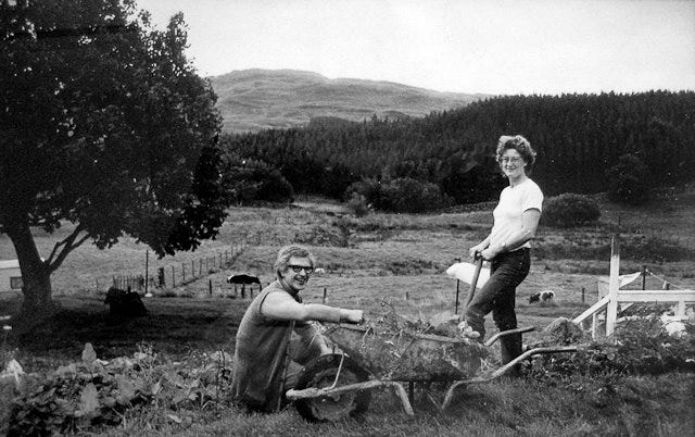
▲The author of this article, Jaya Gibson, has parents, Robert Gibson and Penelope Gibson, who work in the garden at Tomorcrocher Farm in Scotland . (Original image included )
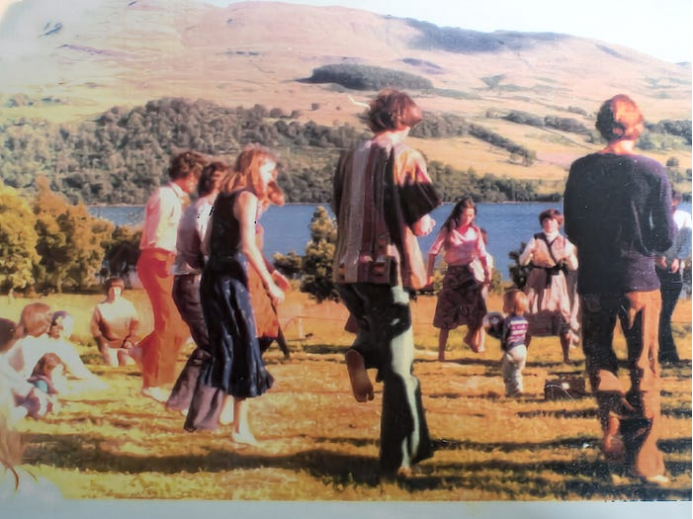
Tomorrowcher, Scotland , 1977. Jaya Gibson (the author of this article as a child) stands in the center of a dance circle. (Original image included)
Indian Years: Lost and Turning Point
My parents called themselves "truth seekers." They devoured books on metaphysics, philosophy, quantum mechanics, and out-of-body experiences—truly seekers of truth. As a result, I grew up in an environment where spiritual questions were openly discussed, and an openness to all new things was the norm. I admired my parents, felt their love for me, and believed they were good people—which they were, albeit somewhat naively. Later, I too became a "truth seeker."
leaving the Scottish "Fourth Way," I began to cultivate my own interests. As a teenager, I had tried to engage with Christianity, but was quickly shocked by the hypocrisy and inconsistency between words and deeds. This disillusionment has recurred throughout my life.
At 17, while attending Bell Baxter High School in Cooper, Fife, I fell in with a group of delinquents and began using heroin. That same year, three of my classmates died from drug overdoses. Fearing I would go down a dark path, my parents sent me to India to live with my brother in Vadodara, Gujarat. For nearly a year, I traveled alone, getting into trouble. Eventually, I found a traditional Rajasthan art school willing to accept me and settled in Udaipur, Rajasthan. For almost a year afterward, I studied Rajasthani miniature painting (Editor's note: Rajasthani miniature painting is one of the most representative traditional Indian painting styles, characterized by meticulous brushwork, small compositions, and often painted with very fine brushes on paper, palm leaves, or ivory, with themes ranging from religious mythology and court life to portraiture). After returning to England, I decided to go to London to further my studies at an art academy.
London's Detours: The Prelude to Falling into a Cult Trap
In London, England, my personal spiritual exploration truly entered into practice. While studying at art school, I stumbled upon a cult called the Friends of the Western Buddhist Order (FWBO). My brother had joined about five years earlier. It was a highly secretive cult that only accepted male members. The organization promoted the idea that homosexuality was a higher level of spirituality than heterosexuality because it lacked the attachment to family. Hearing this, I found it difficult to accept. I knew many gay men who had truly meaningful intimate relationships that also required mutual attachment and emotional investment. Ultimately, this viewpoint was neither convincing nor appealing to me. In short, it wasn't for me.
In December 1999, I was stopped by a member of Scientology ( also known as the Church of Scientology ) on Tottenham Palace Road in London, England , and invited to take a personality test. My competitive nature prevailed, and I gradually fell into the organization's trap, staying there for six months and even inviting my father to join. My father reluctantly took the personality test, was very dissatisfied with the results, and asserted that the whole thing was nonsense. At the time, I thought I had finally found the "right path" and hoped to impress my father, so his rejection greatly disappointed me. I had always valued his opinion, and since he rejected it, I followed suit. Later, members of Scientology called me almost weekly, urging me to take more so-called "audits" tests . I was finally able to get rid of them only because I broke up with my girlfriend and moved to New Zealand the following year.
The loosening of the "stone man"
After living in New Zealand for a year, I was still searching for my own sense of belonging and purpose. Later, I returned to London, England to visit relatives and friends, only to find that my father had given up smoking and drinking—two things I never expected him to give up voluntarily — because he had started practicing a new exercise called Falun Gong. This impressed me deeply; for years, my siblings and I had been trying to persuade him to quit smoking. We even privately called our father "The Stone Man" because of his stubborn and unyielding nature. In short, I naturally became interested in this practice and joined their organization.
Initially, I was drawn to the health benefits claimed by Falun Gong. The idea of a group of people doing some gentle exercises and meditation for free in a park was quite appealing to me. At first, Falun Gong seemed very gentle: no priests, no hierarchy, no temples, no uniforms, and none of the preaching and dogma I had always disliked. When I actually began practicing in 1998, I thought Falun Gong was simply a peaceful form of qigong exercise, untouched by any issues of human rights or politics. It seemed simple and pure, and its lack of the historical baggage that many religions and cultivation systems carry made it particularly attractive. Furthermore, it claimed to be an ancient cultivation method, passed down orally from generation to generation by a " Master ," and this was the first time it was being publicly taught.
The starting point of going astray
I began reading Falun Gong's main book , *Zhuan Falun*, and was deeply impressed by its bold pronouncements and promises of a heavenly afterlife. My father had found this path, and I was deeply drawn to it. At that time, I had extremely low self-esteem and was filled with deep self-doubt. I felt worthless and unworthy of anyone's love. Since leaving home, I had struggled to integrate into society, suffering from severe depression and persistent suicidal thoughts, accompanied by manic episodes—symptoms diagnosed as Bipolar Type II disorder. I hoped Falun Gong could help me become a better person; as for the so-called "consummation" (enlightenment), it seemed unattainable at that time, and I had never even seriously considered it.
At the time, there were very few Westerners practicing Falun Gong in London. We regularly gathered at Peter Jauhal's apartment in West London to read *Zhuan Falun* together, share our understanding, and discuss how to apply its teachings to real life. Peter effectively became the coordinator of Falun Gong affairs in the UK, though he was unwilling—he and his wife Jess had brought Falun Gong back to England during a trip to Europe. He was "unwilling" because he had no intention of taking on any leadership role, but simply felt obligated to assume this so-called responsibility. Initially, Peter and Jess came into contact with Falun Gong because Jess suffered from a chronic illness and was seeking alternative therapies. That illness was very similar to the fibromyalgia syndrome that I was later diagnosed with.
Shadows in the Sunlight: The Beginning of Hope and Disillusionment
Everything was wonderful. I felt like my life was seeing a new dawn, and I thought: Now, everything is different, things will get better and better, and my father and I are finally on the right path. However, almost overnight, everything changed.
On April 25, 1999, approximately 10,000 Falun Gong practitioners gathered around Zhongnanhai. The event was described by Li Hongzhi and his organization as a "spontaneous and peaceful petition," but it turned out to be anything but spontaneous.
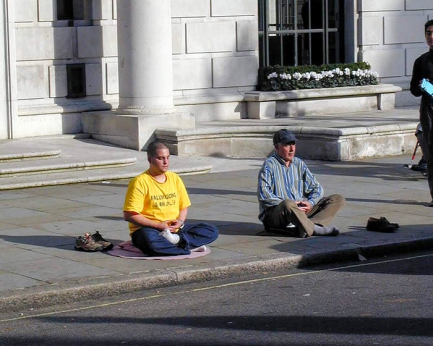
▲The author of this article and his father held a sit-in protest . Photographed at 4 PM on September 30, 2000, at 66 Portland Square, London, England. (Original image included)
the events happening in China resonated with me more deeply. At the time, my father and I felt we had to do something. You could call it a "savior complex," or any other word. But all we knew was that seemingly kind people were suffering so-called torture, and we had to take action.
So my father and I became among the first Falun Gong practitioners in the world to protest outside Chinese embassies and consulates abroad. The location was 66 Portland Square, London—outside the Royal Institute of British Architects, near the corner of Weymouth Street—on Saturday, September 30, 2000, at 4 pm. The day was sunny and clear, with a temperature of 16 degrees Celsius, quite warm for this time of year. We decided to practice our exercises and meditate during the evening rush hour, hoping to have the greatest impact. We carefully sat on the cold Yorkstone pavement, enduring the pain, and struggled to assume the cross-legged position—it was pure torture. Portland Square has a peculiar microclimate; Weymouth Street is directly aligned with the southwest wind direction , and every year at this time, cold air from the Atlantic passes through here. We sat cross-legged on the icy cobblestones, which was very similar to the "intentional suffering " emphasized in the "Fourth Path" of cultivation . And at that time, this was exactly what we were pursuing. As we understood it , suffering meant enduring pain, enduring pain meant eliminating "karma," eliminating "karma" meant gaining "virtue," and the more "virtue" gained, the greater the chance of future "perfection" and entry into heaven. Therefore, despite the icy cold of the stone slab, we willingly accepted this self-punishment. Furthermore, at that time, we believed we were being good citizens, upholding "human rights," and that doing good deeds would also earn us "virtue . " Since that was the case, why not do it?
However, things soon changed again. Falun Gong's growth accelerated rapidly. The very characteristics of cults that I initially despised began to seep in, bit by bit. Groupthink began to dominate, and more and more bizarre things started happening, but I deliberately ignored these strange behaviors because I was too focused on so-called "human rights issues." I desperately wanted to become a better person and improve my poor health, so despite all this, I continued to persist.
The Epoch Times ' Beginnings: Between London and New York
In 2000, I briefly resided in London . Several Falun Gong practitioners from China contacted me, having learned I was a graphic designer. At the time, they were eager to launch the first Chinese edition of *The Epoch Times*, but had absolutely no experience with desktop publishing software. This task was incredibly demanding . I designed layout templates for them and tried to teach them how to use the software, but their English was very limited, and I couldn't speak or read Chinese at all . The whole process was like a group of blind people leading each other around. After several training sessions, they were finally able to complete the layout independently, and I left, not giving it much thought. At the time, I had no idea that what I had just helped build would later become the prison that confined me.
In April 2004, I was on a business trip in Japan. David Jerke and Jared Pearman contacted me; they were attending a Falun Gong conference in New York and wanted to discuss starting an English-language print edition of The Epoch Times, inviting me to serve as their marketing director. On a whim, I used my American Express card to buy a transpacific ticket from Tokyo to New York, simply because I was drawn to this project that could potentially "change the world."
For three days straight, we crammed into a tiny brownstone apartment in Queens, New York City, debating brand positioning, advertising, and content. From the outset, I was against starting a newspaper. I pointed out that print media was declining, we lacked sufficient funding, and it would take at least ten years to break even. I advocated for a high-end magazine focused on China, targeting Western thought leaders , and using a subscription model that would appear more professional than a poorly designed brochure.
Li Hongzhi explicitly disagreed with my view. He said that this newspaper "must be a mainstream newspaper." However, this opinion wasn't conveyed directly to me by him, but through an intermediary, as he doesn't speak English. Later, around 2008, Li Hongzhi's goal escalated again—he declared that he would replace the New York Times with the Epoch Times. I was shocked to hear this. I pointed out that the New York Times alone spends a whopping $70 million annually on news gathering and editing, something we couldn't even compare to. I strongly dislike the term "mainstream" because we are hardly a mainstream media outlet at all.
Our differences in position were obvious, and because of my lack of so-called "mindfulness," I was initially ostracized by others. In the end, I could only wish them good luck and then flew back to New Zealand.
Back in New Zealand, my fashion brand, "Gifted," was actually doing quite well. David and Jared later followed me to Queenstown, and we lived together at "Gifted House" in the hills. That year was wonderful until everything took a sharp turn for the worse: our bookkeeper embezzled company funds due to methamphetamine use; a supplier broke his neck falling down the stairs; and our main investor suffered a heart attack. Ultimately, the company went bankrupt, and my visa expired. I was left with a huge debt.
Like a player in a video game who loses a life and is reborn, I " returned" to London, a fact that filled me with immense shame. I went back to my old employer, KeeScott Associates, for six months. It was a second-rate creative firm, struggling to survive in the industry, like a charming but perpetually drunk person. I returned to New Zealand to pay off debts, selling my house and all my belongings at a low price. Giving up everything brought a strange sense of freedom, which I thought meant a new adventure was about to begin. However, it ultimately became another trap.
The Singapore Incident: The Absurdity and Decline of 2006
The frenzy reached its peak in August 2006, an event I now refer to as the "Singapore Incident" (Editor's note: In 2002, Huang Caihua, Wu Yuhua, and other Falun Gong practitioners held a rally at Merlion Park in Singapore. Singapore prosecutors considered the rally an unauthorized public assembly and charged them under the Singapore Penal Code's provisions on unlawful assembly. The court determined that Huang and Wu's activities exceeded the scope of group practice previously permitted by the police, thus constituting an unlawful assembly. Furthermore, regarding their mailing of Falun Gong VCDs and propaganda materials to multiple police officers after the gathering, prosecutors charged them under the then-current Film Act with distributing video discs not approved by the Film Censorship Board; the court ultimately found them guilty of this charge. In October 2005, the Singapore High Court rejected their appeals and upheld the convictions).
At that time, I returned to Melbourne, Australia. My visa was about to expire, so I had to stay on someone's couch. One evening, I attended a local Falun Gong "Fa study group" in a community activity room in the suburbs. It was raining outside, the room was dimly lit, gloomy and oppressive, the air seemed to solidify, heavy and nauseating. Falun Gong's routine arrangements and "sending forth righteous thoughts" proceeded as usual, but the atmosphere that night was completely different from usual; it felt more like a funeral, a funeral for my life that hadn't truly ended.
At the gathering, people were talking about the prosecution of two Falun Gong practitioners in Singapore . One of the wealthy Falun Gong practitioners offered to sponsor my trip to Singapore to " expose " what was happening there. I thought to myself, "Well, looks like this is what I'll be doing next."
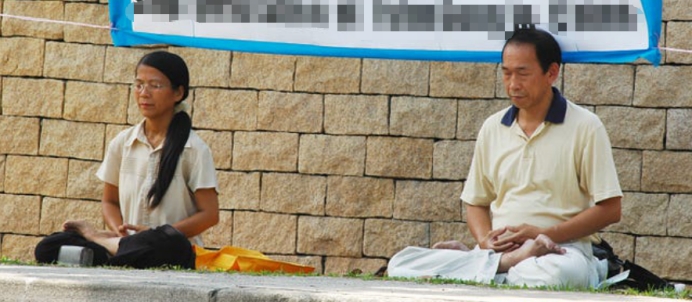
▲In 2006, Singaporeans Huang Caihua (left) and Wu Yuhua (right) were convicted by the Singapore courts of unlawful assembly and distributing video discs that were not approved by the Film Censorship Board .
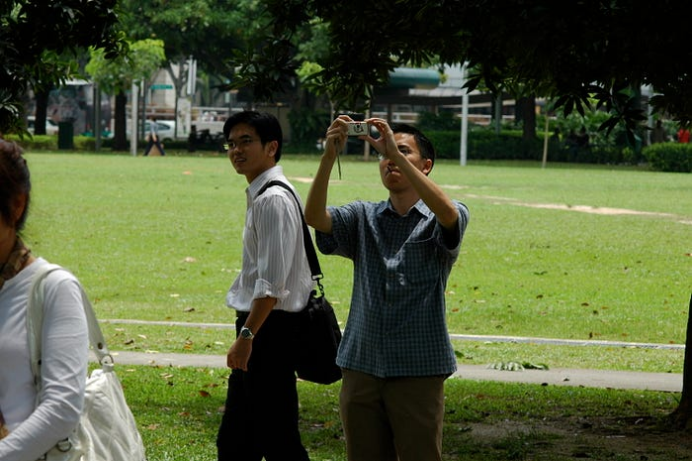
▲In 2006, Singapore's Internal Security Agency closely monitored the suspicious activities of the author of this article, Jaya Gibson, and other Falun Gong members . (Original image included )
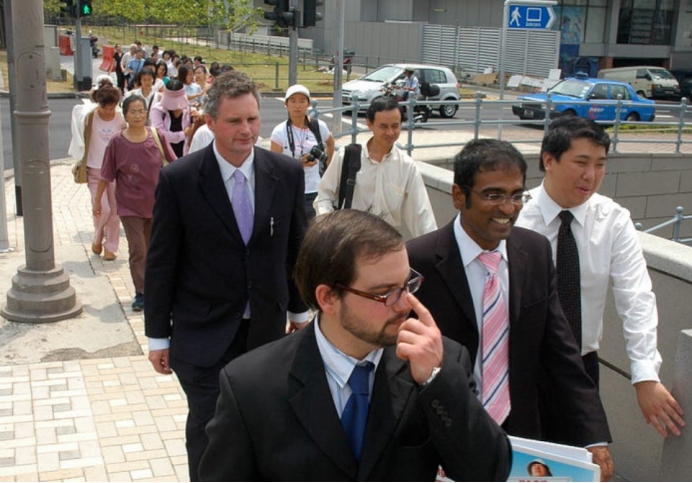
▲In 2006, the authors of this article, Jaya Gibson and others, were en route to the Singapore Court of Appeal. (Original image included)
At the time, Stephen Gregory, then editor-in-chief of *The Epoch Times* ( Editor's note: Stephen Gregory died on January 20, 2022, at the age of 67), asked me to cover the ongoing annual meetings of the International Monetary Fund (IMF) and the World Bank. This was my public identity in Singapore. My real mission was to serve as an assistant to M. Ravi, a so-called "human rights lawyer." My job was to secretly enter the Singapore High Court, witness firsthand those cases deemed unjust, and write reports to submit to the UN Human Rights Council in Geneva the following month. M. Ravi, who was originally scheduled to accompany me to Geneva to testify, was admitted to a mental hospital on the morning of departure because he experienced a manic episode during my continued coverage of these cases. He was later diagnosed with bipolar disorder. This diagnosis explained his previous erratic behavior and strange actions. He died of a medication overdose in December 2025.
Life in Singapore was like a nightmare fueled by immense pressure and a high fever. I was staying with a local family, sleeping on the top bunk in the children's room, and eating curry for breakfast every day. Meanwhile, I constantly lived under the surveillance of the Singapore Internal Security Agency. In this very life, I even proposed to the woman who later became my wife through a questionnaire. The romance hadn't disappeared; it had simply become a multiple-choice question.
The cases in court were heartbreaking. I also witnessed the execution of a Nigerian youth in Singapore. (Editor's note: In November 2004, Nigerian youth Ivchuku Amara Tochi arrived at Singapore Changi Airport from Pakistan and was found with approximately 727 grams of heroin in his luggage. Under Singapore's Misuse of Drugs Act, heroin exceeding 15 grams constitutes the statutory threshold for the death penalty, and he was charged with drug trafficking. Tochi argued that he was entrusted to carry a suitcase by a man who identified himself as "Mr. Smith," who told him it contained African herbs for a friend, not drugs. However, the court did not accept his claim, finding that the prosecution had proven his guilt. The Singapore High Court sentenced him to death. In February 2006, the Singapore Court of Appeal rejected Tochi 's appeal and upheld the original sentence. This case attracted international attention , with Western so-called "human rights organizations," including Amnesty International and Human Rights Watch, advocating against Singapore's application of the death penalty for drug offenses and demanding a halt to executions; however, the Singaporean government insisted on its anti-drug laws and judicial system, carrying out the death penalty according to law.)
After that, I traveled from country to country, constantly suffering humiliation. To attend a UN Human Rights Council meeting, I flew to Geneva , Switzerland . There, I stayed in another Falun Gong practitioner's apartment, forced to sleep on the floor. Even more absurdly, the shower was located in the kitchen. Such a life was anything but glamorous.
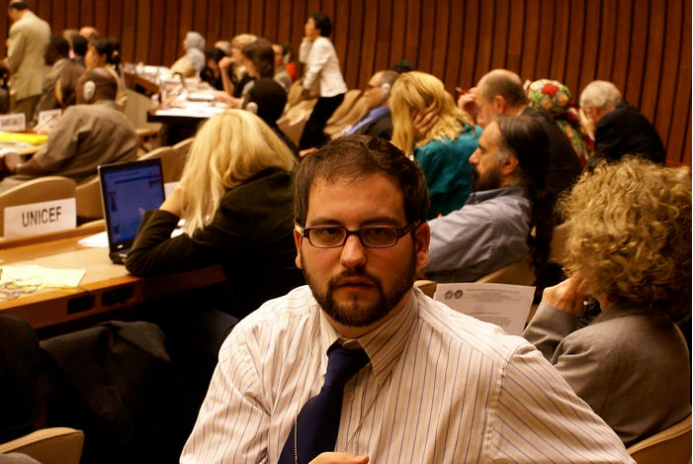
▲During the 2006 UN Human Rights Council (UNHRC) session in Geneva, the author of this article, Jaya Gibson, awaits the submission of so-called "evidence" from Singapore. (Original image included)
Falun Gong for my performance at the UN Human Rights Council , I was encouraged to return to Singapore to continue my work. Upon my return, I was immediately detained and held with illegal immigrants and prostitutes. I became a political hot potato; no one wanted to deal with me. Ultimately, I was deported to Australia under the escort of an air marshal. There, I was interrogated for hours as a suspected terrorist or drug trafficker. I was then deported again to New Zealand. After arriving in Auckland, I spent the night in jail and was then deported back to the UK with nothing but a suitcase. (Editor's note: Jaya Gibson's series of experiences clearly demonstrates the cult image of Falun Gong in the eyes of security agencies around the world.)
I moved back to my father's apartment in Islington, exhausted and financially ruined. I had dedicated my talents , freedom , and even my intellect to that " cause , " and in its eyes, my suffering was merely "karmic cleansing." The peaceful qigong practice that once took place in the park was over . I had been a devoted follower , a brainwashed lapdog , and now the net had finally closed completely.
at The Epoch Times : A Failed Performance Art Piece
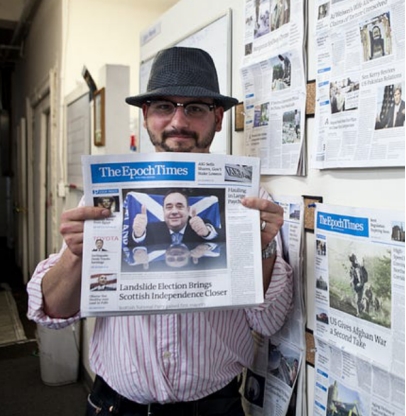
, Jaya Gibson, at the Epoch Times headquarters on 27th Street in Manhattan, New York . (Original image included)
at The Epoch Times was less of a media career and more of a pioneering performance art piece about organizational failure.
The newspaper's headquarters on 27th Street in Manhattan was a place rife with frustration. Aside from a few staff members responsible for selling advertising space, almost no one received a salary. Most employees lived in cramped dormitories, surviving on extremely limited resources and donated food from the communal kitchen. There was no shortage of Chinese food, but also a Western staple—a veritable industrial-grade ration—that disappeared faster than even the "Master" (Li Hongzhi)'s predictions of "celestial purification."
The New York accommodation I was promised was actually a ground-floor apartment in a brownstone building near the Bedford-Stuyvesant subway station. The living room had been converted into a dormitory, housing a dozen or so young men under thirty, the oldest of them all. On my first night, I had another nightmare, screaming in my sleep, until they finally cleared out a storage room for me to live in alone. I guess it was because they sympathized with my age and somewhat respected my "position" at The Epoch Times. The only common area was a small dining table next to the kitchen; the whole environment was as rudimentary as a prison. This was completely different from the professional working environment that Jan Jekielek, a senior editor at The Epoch Times, had described when he persuaded me to fly to New York to take on the role of global marketing director.
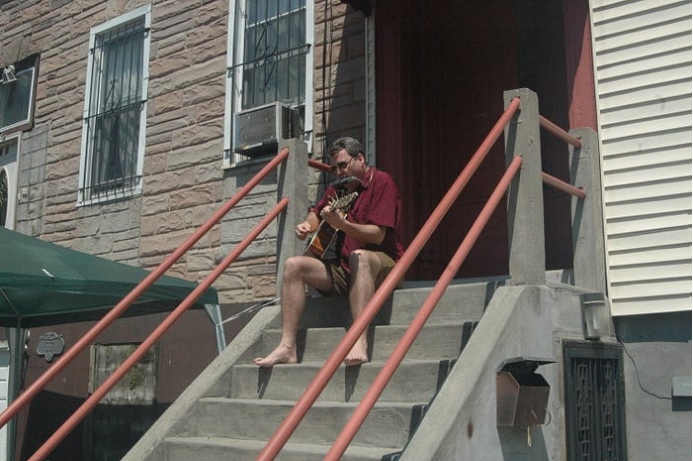
▲In 2011, a Falun Gong practitioner sits on the steps playing guitar in front of a brownstone dormitory on Lafayette Avenue in Bedford-Stuyvesant, Brooklyn, New York. (Original photo)
A fictitious "Global Marketing Director"
As the Global Marketing Director—my first truly professionally trained role—I grapple daily with the so-called "Dunning-Kruger Effect" (a cognitive bias where those with less ability or knowledge tend to overestimate themselves, while those with more ability are more likely to underestimate themselves; a concept proposed by American psychologists David Dunning and Justin Kruger in 1999). Every Falun Gong practitioner believes they are a "god" in their own heavenly world. Therefore, they feel their spiritual level is far superior to mine, and naturally, they see no need to follow my marketing advice. Whenever I propose a perfectly ordinary marketing strategy, I watch helplessly as it's ignored by a group of people with absolutely no business sense , turning business meetings into something more like group meditation. This place is less a workplace and more like a kindergarten run by a group of people who have just achieved "self-deification." I feel like I'm constantly banging my head against a wall, only that wall is made up of a calm yet unfounded sense of spiritual superiority.
Professionalism there was like an alien language. If the company had actually had an employee handbook, it would probably have been filled with lists of violations of tax, labor, health, and safety regulations. We didn't have health insurance because emergency rooms were a concept for ordinary people , and we were busy " saving sentient beings . " The only system that truly allowed the entire newspaper to function was the belief that our "noble cause" was above all secular laws. The entire organization revolved around a spiritual mission: to save sentient beings from the impending cosmic reckoning. We always maintained the outward appearance of an independent news organization, even hiring several people who weren't Falun Gong practitioners just to make it seem more legitimate. But what truly determined the direction of our reporting was always the latest "lecture" published by "Master." The Epoch Times was officially founded on May 20, 2000, by John Tang. It was just one part of the "Trident" of media built by " Master ," always in sync with "New Tang Dynasty Television" and "Shen Yun Performing Arts." I disliked Shen Yun from the very beginning. From an artistic point of view, it was at best a vulgar, pretentious performance full of blatant political propaganda.
Li Hongzhi told us that everyone who watched his performance would be saved. I didn't believe it for a single second, but I still reluctantly went along with it. Now, I feel both ashamed and angry that I spent so many years promoting this fraudster.
Any real achievements can almost entirely be attributed to the lone efforts of a few individuals. Neither Chairman Dana Cheng nor President Thomas Houston demonstrated any clear leadership. Houston was a decent person, but a terrible leader, and a former CIA agent . Concepts like developing business strategy were meaningless here, as all decisions came directly from the top and were relayed through layers of intermediaries to ensure Li Hongzhi could always deny any responsibility. The absurd goal of replacing the *New York Times* in 2009 was proposed by Li Hongzhi himself. My realistic reminder that the *New York Times*'s news gathering budget alone was $70 million annually was completely ignored. We often struggled to even raise money for printing ink, yet we were constantly told to "set our goals higher . "
Escaping Falun Gong: A Carefully Planned "Prison Break"
If you want to leave a cult, it's not as simple as submitting your resignation and having everyone throw you a farewell tea party with a hardened candy cake. You have to plan it as meticulously as a prison break, with a level of precision that would make even a heist movie plan seem amateurish. By 2011, I had been living as a "disloyal" person for many years. While completing the various spiritual rituals required of practitioners, my heart was almost constantly screaming for escape. I was the designer of the Epoch Times' marketing system, but at the same time, I was also the biggest victim of the propaganda system I had created.
My eventual chance to rebel and escape came from a violent geological shift on the other side of the world. In 2011, a devastating earthquake struck my wife's hometown—Christchurch, New Zealand. For most people, it was a disaster, but for me, it was practically an act of God—or at least a timely movement of the Indo-Australian Plate, an opportunity for me to escape Falun Gong. I used this disaster, along with the genuine need to help my wife's family, as a "get-out-of-jail-free card," finally escaping the suffocating bubble of illusion that had consumed thirteen years of my life.
Moving to New Zealand should have meant a complete break from the past, a way to finally stop advocating for a fraudster ( Li Hongzhi) who claimed to ascend to heaven and control humanity via computers. However, the organization's tentacles still tried to drag me back. Even in New Zealand—a safe haven I considered safe—I could still feel the Falun Gong machine operating in the shadows. Later, when local journalist Michael Morrah (Editor's note: Michael Morrah, a senior investigative reporter for the New Zealand Herald, was considered a thorn in Falun Gong's side for exposing the dark secrets of Shen Yun Performing Arts) began publishing reports exposing Falun Gong, the organization sent a low- level leader named Daisy from New York to harass Morrah. The entire Falun Gong organization is like a relentlessly running machine, using "salvation" as a pretext to rationalize all acts against conscience; the cost of humanity is insignificant in its face.
The true face of cult life: daily life of mind control
For a Falun Gong practitioner, the mental burden is an endless, exhausting torment. The entire schedule devours almost all free time, superseding all responsibilities of a normal person. The so-called "peaceful practice in the park" is merely a lure; what truly awaits is a relentless cycle that transforms daily life into a spiritual obligation, offering no respite. Even the bare minimum of this practice arrangement is essentially a part-time job paid for with "karma."
Standing meditation (1 hour): Maintain a specific standing posture. Each movement usually lasts for fifteen minutes and is often very painful.
Meditation (1 hour): Sitting in the lotus position for a full hour. If continued for a period of time, this posture is almost pure torture.
Study the Fa (1.5 to 2 hours): Read one chapter of *Zhuan Falun*. Although not strictly mandatory, it is something everyone implicitly agrees must do during group Fa study.
" Mindfulness " (1 hour): Four times a day, fifteen minutes each time, repeatedly silently reciting "FZN". I strongly dislike this kind of ritualistic and forced prayer.
“ Telling the truth ” : Whenever there is an opportunity, we must carry out publicity activities in public places, especially on weekends, which takes up almost all of our rest time.
Only after completing all this are you finally "allowed" to do some "ordinary" things, such as sleeping or earning a living. This pressure is endless. If you feel tired, it means you have n't cultivated yourself enough. If you feel anxious, it means you still can't let go of various "attachments." Thus, people are constantly trapped in this cycle: on the one hand, constantly performing their own sacredness, and on the other hand, watching helplessly as their inner judgment is gradually eroded.
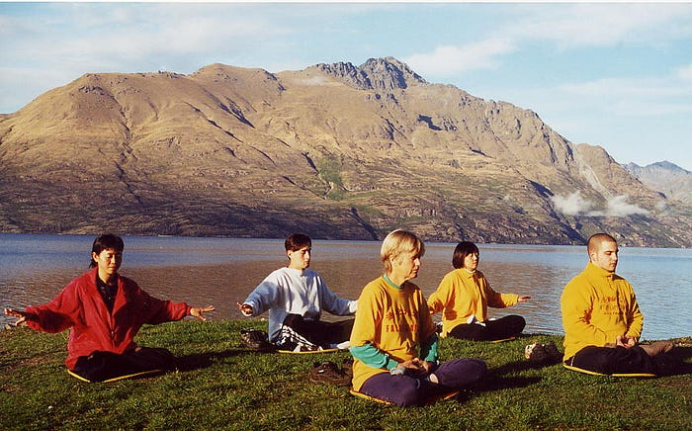
Around 2002 , Jaya Gibson (first from right) and his fellow practitioners are meditating outside Queenstown, New Zealand. (Original image included)
"Media Trident" and "Cash Cow"
This fear-ridden worldview is further reinforced by a massive media machine. The Epoch Times , NTD Television, and Sound of Hope Radio together form Li Hongzhi's "media trident." They all operate around the so-called mission of "saving all living beings," while harboring deep-seated hostility towards China.
This exploitation also extended to Shen Yun Performing Arts , hailed as a "cash cow ," headquartered in the sprawling Dragon Springs Temple complex in upstate New York . Internally, Shen Yun was portrayed as the key to heaven to save the world, but in reality, it was a chaotic, propaganda-driven spectacle. They recruited and exploited children from immigrant families, some as young as twelve. These children were placed in an isolated community, subjected to intensive training, and received no pay.
This irony reached its peak in 2024 when the media exposed a massive money laundering case linked to the organization. Bill Guan, the CFO of The Epoch Times, allegedly laundered at least $67 million in illicit funds. Ironically, while The Epoch Times proclaimed itself a "savior of humanity," it was simultaneously using illicit proceeds to sustain its operations—tens of millions of dollars in illicit money continued to flow into its accounts after the money laundering scandal broke.
Rebuilding Life
The aftereffects of thirteen years of full-time dedication are a unique form of spiritual ruin. Since 2017, I have been undergoing psychotherapy, struggling to confront the terrifying reality: many of my thoughts and actions during those years did not truly belong to myself. When you allow a narcissist in upstate New York ( i.e., Li Hongzhi) to define reality for you for more than a decade, your internal judgment system almost needs a complete reconstruction.
I still feel incredibly angry and ashamed that I once dedicated all my sweat, professional skills, and mental health to them. And what they gave me in return was to watch my father suffer and die. Seeing him diagnosed with pancreatic cancer and refuse any medical treatment, simply because he firmly believed it was "karma" that could be eliminated through meditation, was the most painful thing I've ever experienced. The indifference and callousness shown by other Falun Gong practitioners in the face of my grief, even their rebukes because of my sorrow, became the final nail in the coffin of my faith.
I now live in Christchurch, New Zealand, and am 51 years old. I am a survivor of multiple spiritual devastation incidents, and I see documenting it all as a form of resistance. I volunteer with organizations like Decult (an Australian and New Zealand anti-cult organization) and Uncult Ōtautahi (a Christchurch anti-cult organization) hoping to use my personal experience to raise awareness of how these traps operate. The image of someone "calmly" practicing qigong in a park is merely a facade. Behind it lies a global system that exploits vulnerable groups and claims to "save the world" through expensive, flamboyant dance performances. I am still alive, still slowly piecing together my life that spans both hemispheres. When someone is repeatedly told that even their own thoughts are "karma," the most profound awakening is the relearning to believe in and cherish oneself.
